Is River Plate Stadium worth visiting?

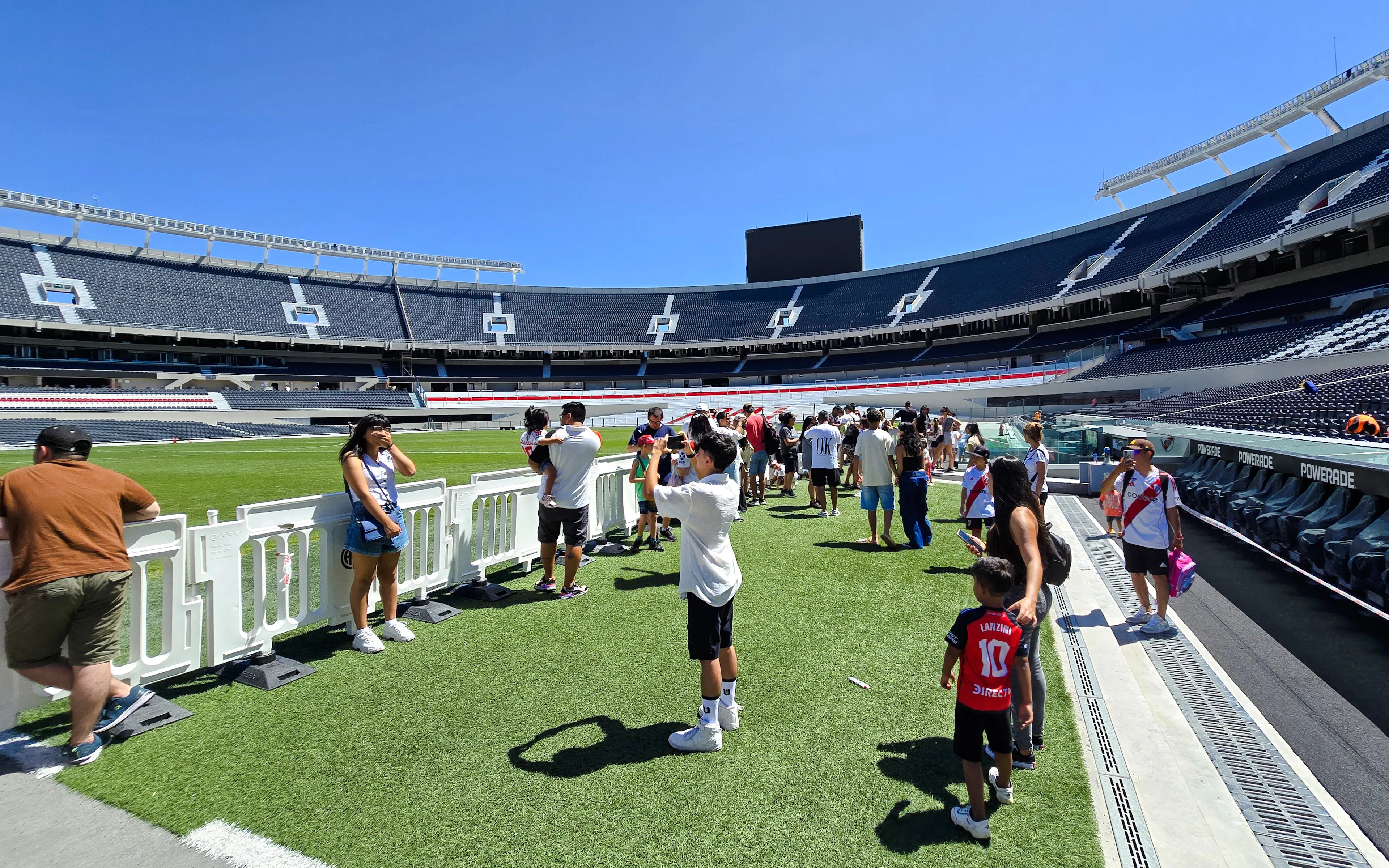
There is nothing in Buenos Aires that prepares you for the scale of it. You walk through the players' tunnel, the crowd noise plays over the speakers, and then you step out into open air and suddenly 83,000 empty seats rise up around you in every direction. It takes a moment to process.

River Plate Stadium was not just built for football. It was built to embody a club's identity and, by extension, a city's. For over a century, Club Atlético River Plate has been woven into the fabric of Argentine culture, and the Estadio Monumental is where that history lives, in its trophy halls, its Time Tunnel of legendary players, and in the stands where generations of fans have stood side by side.

The emotional payoff is the sense of access. The locker room corridor, the pitchside view, the presidential box: these are spaces most visitors will never otherwise enter, and the guides who walk you through them carry a genuine pride that makes the stories land differently.

Skip it if football culture holds no interest for you, and enclosed museum spaces are not your preference. The experience is built around River Plate's legacy, and visitors who arrive with no connection to that story will find less to hold their attention than those who come even mildly curious.

What to see at River Plate Stadium

Placeholder Image Headout Blimp
1/6

The players' tunnel and pitchside access

The highlight of every tour. You line up in the same tunnel the players use on matchday, the crowd simulation builds around you, and then you emerge at field level with the full bowl of the stadium opening up above. You cannot step onto the turf itself, but the view from the touchline is what every visitor photographs and remembers. This is the moment the stadium stops being an interesting building and becomes something you feel.

Museo River and the Time Tunnel

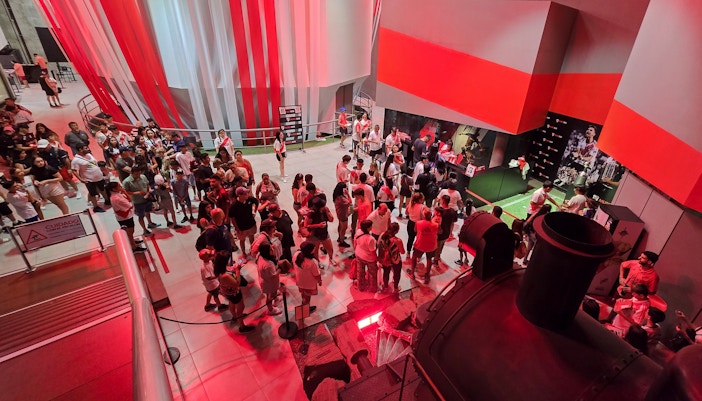
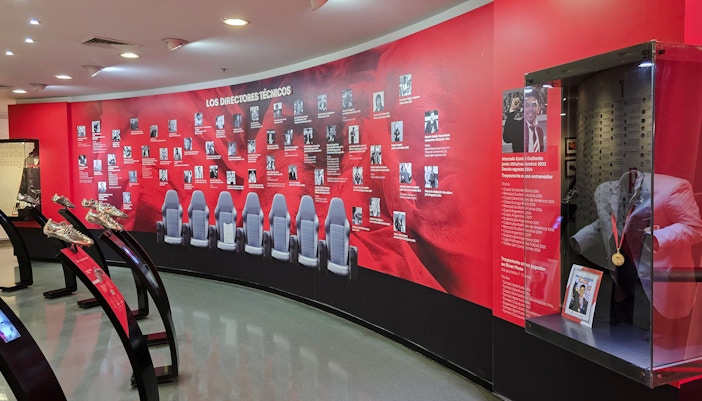
The museum spans 3,500 square metres and traces River Plate's history from its 1901 founding to the present day. The Time Tunnel moves chronologically through each era, presenting trophies, jerseys, personal effects, and multimedia context. The four Copa Libertadores cups and the 1986 Intercontinental Trophy are the centrepieces of the trophy hall, and the exhibits are rich enough to hold the attention of visitors who arrive knowing little about the club.

The 360° immersive cinema

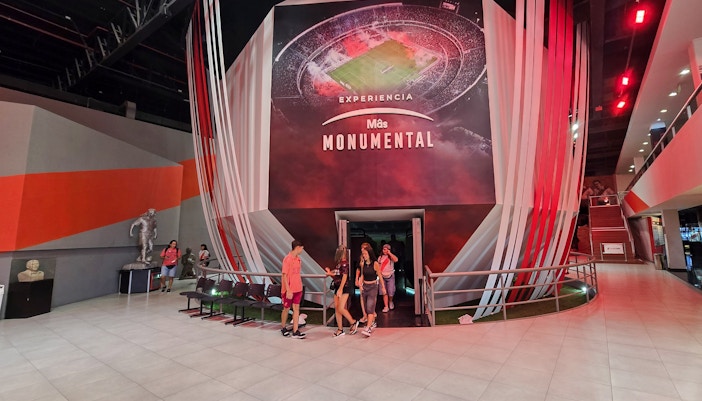
The museum's most technically ambitious feature, and the one most visitors mention in reviews. The circular cinema surrounds you with floor-to-ceiling footage and surround sound, placing you inside the experience of a packed River Plate matchday. It is a short film, roughly five minutes, but the effect is genuinely visceral and does more to convey Argentine fan culture than any exhibit panel could.

The panoramic stands

The climb into the San Martín stand gives you the best overview of the stadium's scale, four tiers of seating stretching in every direction, with Buenos Aires' skyline visible beyond the upper rim. Guides use this vantage point to explain the stadium's history, the record crowds, and the specific moments that have defined El Monumental's place in Argentine sporting memory.

VIP areas and the presidential box

Tours typically include a stop at the presidential box, where dignitaries and club guests watch matches in a setting that contrasts sharply with the public stands. Guides usually share stories of the notable figures who have sat here, which gives the space a texture that makes it more than just a comfortable seat with a good view.

The trophy hall and RiverArte gallery

Beyond the Time Tunnel, the trophy hall gathers River Plate's 35 domestic league titles and international silverware in a single space. Adjacent to it, the RiverArte gallery presents fan-created artwork inspired by the club, which provides a different kind of evidence for what River Plate means to the people who follow it.

How to explore River Plate Stadium

Budget a minimum of 2 hours for the guided tour and museum combined, and closer to 2.5 hours if you want to browse the trophy hall and gift shop without feeling rushed. The guided portion of the tour runs approximately 45 to 60 minutes; the museum is self-paced.

Suggested route: Start in the museum and work through the Time Tunnel chronologically so the history is in place before you enter the stadium itself. The guided tour then picks up from the museum exit and moves through the stands, the presidential box, the locker room corridor, and out to pitchside. Ending at the tunnel is intentional; it is the payoff the rest of the tour builds toward.
Must-see: The players' tunnel and pitchside access, the 360° cinema, and the trophy hall. These three account for the moments visitors most consistently describe in reviews.

Optional: The RiverArte gallery and the panoramic stand climb are worth the extra time if you have it, but neither is essential if you are working to a tighter schedule.

Guided vs. self-paced:

The guided tour is the only way to access the stadium sections, including the tunnel and pitchside area. The museum portion is self-paced. If you are not a Spanish speaker, confirm at the time of booking whether an English-language departure is available on your chosen date, as not all tour slots offer bilingual guiding. This is one detail worth getting right in advance rather than discovering on arrival.

Brief history of River Plate Stadium

  • 1901: Club Atlético River Plate is founded in the La Boca neighbourhood of Buenos Aires, though the club would later move north to Núñez.
  • 1938: The Estadio Monumental opens in the Núñez district, giving River Plate a permanent home that would grow into the largest stadium in Argentina.
  • 1978: The stadium hosts the FIFA World Cup Final on June 25, with Argentina defeating the Netherlands before a crowd of over 71,000. It remains the defining moment in the stadium's international history.
  • 2009: Museo River opens within the stadium complex, transforming the site from a matchday-only venue into a year-round destination for football tourists and River supporters.
  • 2019: Annual museum and tour visitors reach a pre-pandemic record of approximately 206,000.
  • 2022: Following a major renovation that increased River Plate Stadium's capacity to approximately 83,000, visitor numbers rebounded to a new record of approximately 230,000 for the year.
  • Today: The stadium operates as both River Plate's active home ground and one of Buenos Aires' most-visited cultural attractions, welcoming fans, tourists, and school groups daily across its museum, guided tours, and special events programme.

Architecture of River Plate Stadium

Style: Modernist sports architecture, with successive expansion phases layered over a mid-20th-century concrete core. The contrast between the original structure and the newer tiers is visible in the stands and forms part of the guided commentary.

Materials: Reinforced concrete throughout, with the upper tiers added during renovation phases using contemporary construction methods. The stadium's elliptical bowl and tiered seating geometry ensure clear sightlines from every section.

Scale: At approximately 83,000 seats after its most recent renovation, the stadium ranks among the largest in the world by capacity. The four-tier seating bowl creates a near-complete enclosure that amplifies crowd noise to an intensity that visitors who attend matches consistently describe as unlike anything they have experienced in European stadiums.

Frequently asked questions about River Plate Stadium

Yes, and that applies to visitors who are not River Plate supporters as well as those who are. The combination of the museum's depth, the 360° cinema, and the pitchside access creates an experience that goes well beyond a standard stadium tour.