Everything you need to know about the Obelisco Buenos Aires

Why is the Obelisco de Buenos Aires a must-visit attraction?

The Obelisco de Buenos Aires is more than a monument; it is the emotional and geographic heart of the city. Standing at the intersection of Avenida 9 de Julio, the world's widest avenue, the Obelisco places visitors right at the crossroads of Buenos Aires’ cultural, political, and social life.

Locals gather here to celebrate football victories, national holidays, and historic moments, transforming the space into a living stage of collective expression. Its location is of immense historical value. After all, this is where the Argentine flag was first raised in 1812, four years before the country gained independence, and this moment is inscribed on the Obelisco’s facade.

Its central location makes it an ideal starting point for exploring nearby neighborhoods like Microcentro, San Nicolás, and Teatro Colón. Whether you visit by day to admire its clean architectural lines or by night when it glows against the skyline, the Obelisco delivers a powerful sense of place.

The Obelisco is a great first Buenos Aires landmark to experience during your visit to Buenos Aires. It gives you a sense of the city’s layout and gives you the chance to spot some of its most notable landmarks.

What to see at the Obelisco de Buenos Aires?

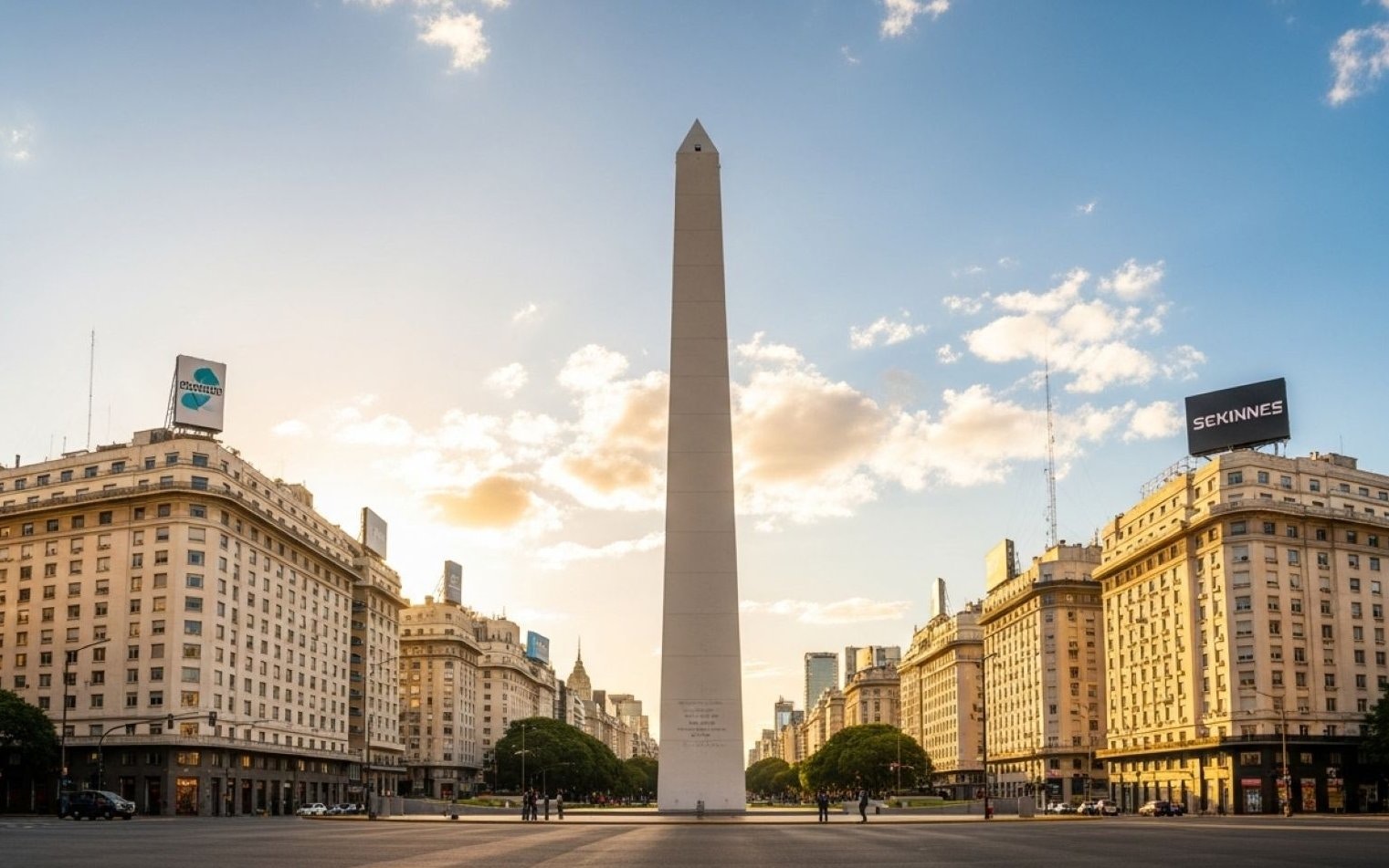
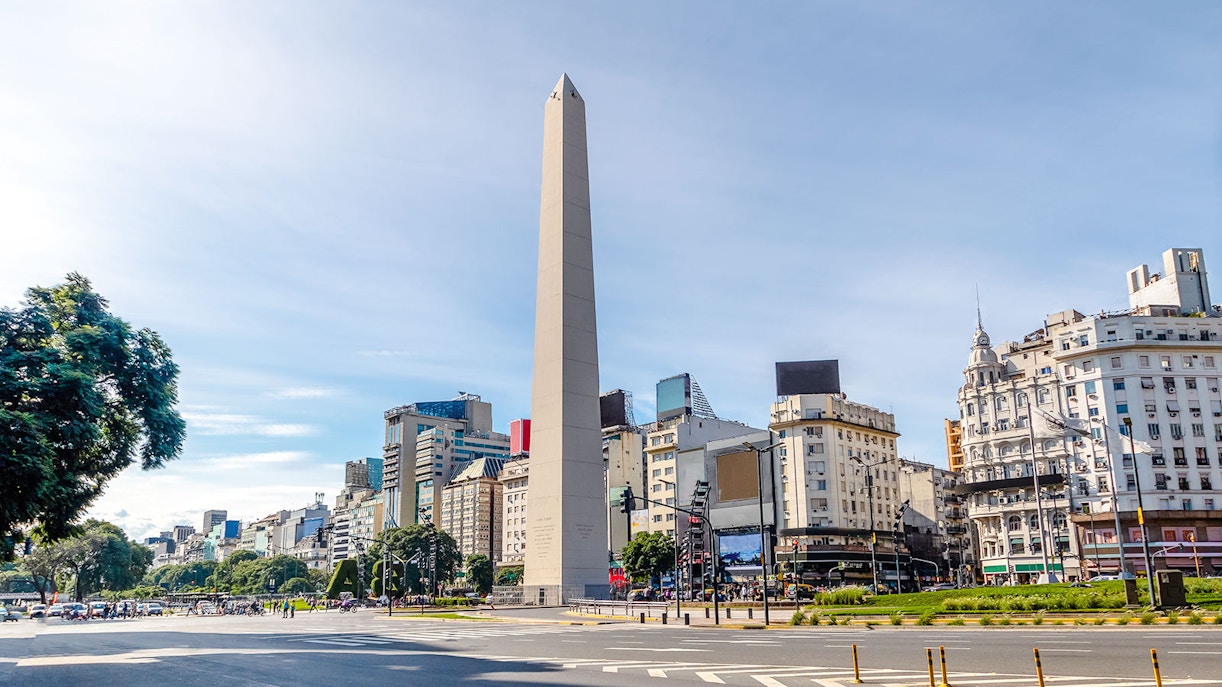
Obelisco de Buenos Aires with surrounding buildings at sunset.
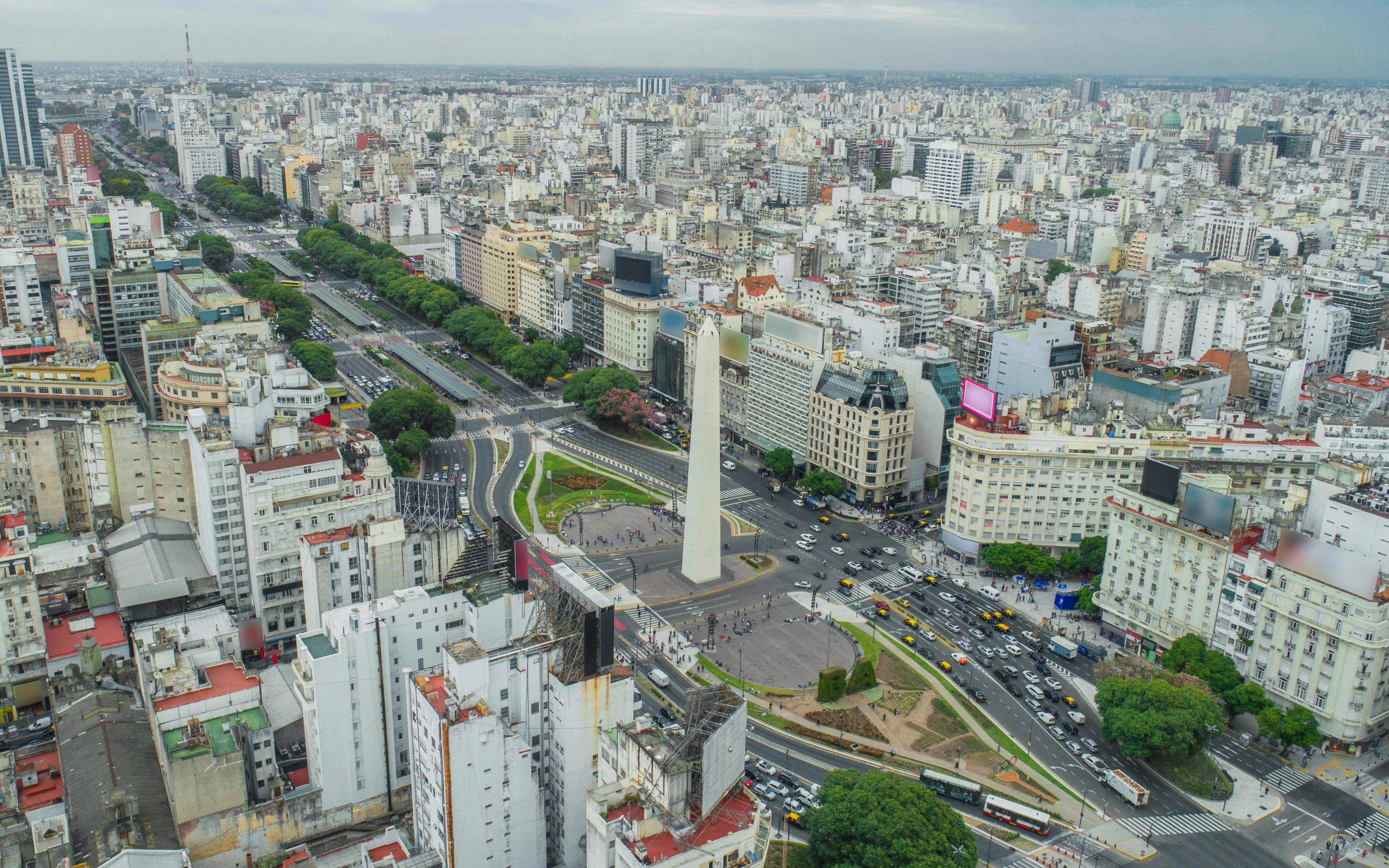
Aerial view of Obelisco de Buenos Aires and Plaza de la República, Buenos Aires, Argentina.
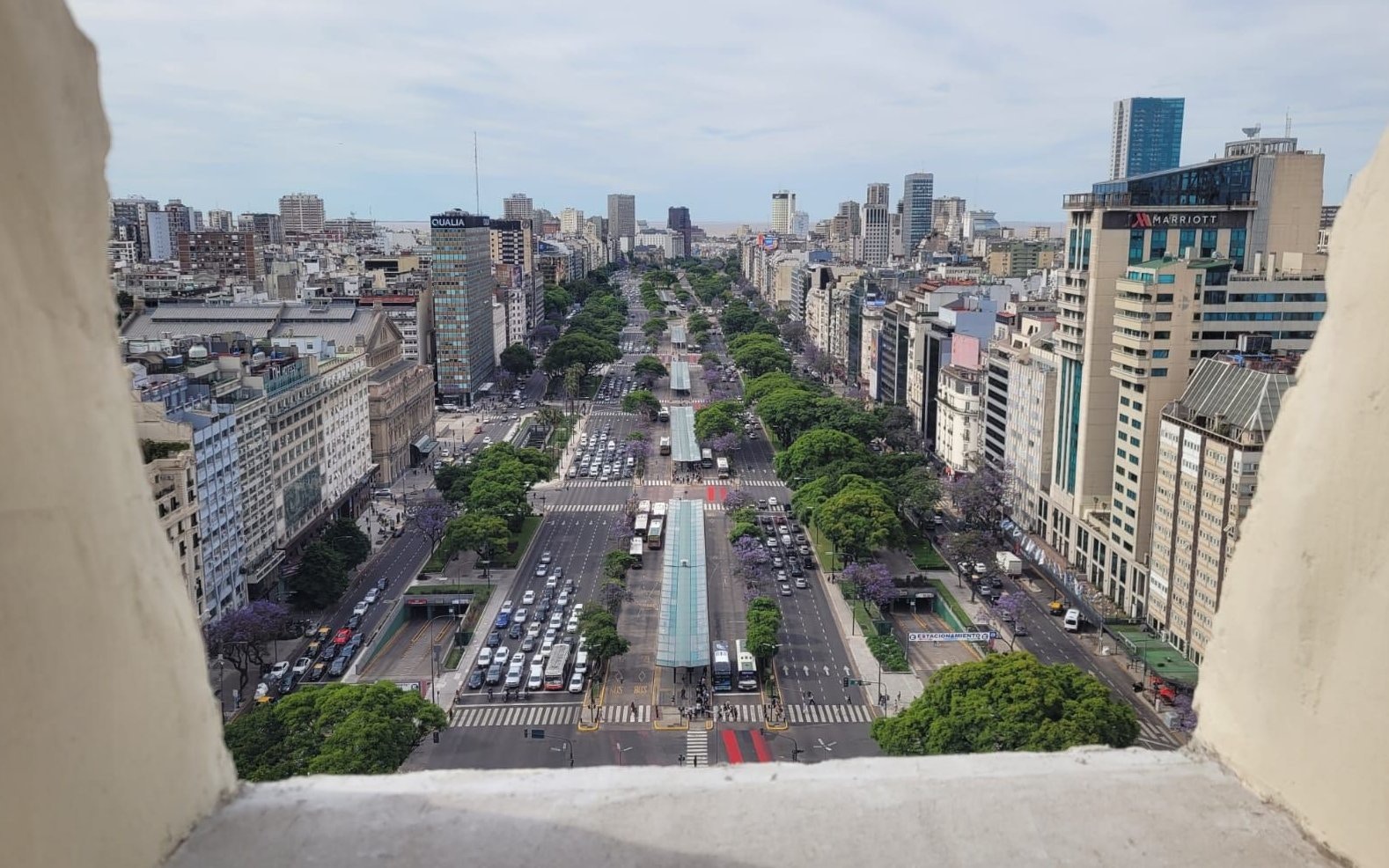
View from Obelisco de Buenos Aires overlooking Avenida 9 de Julio, Argentina.
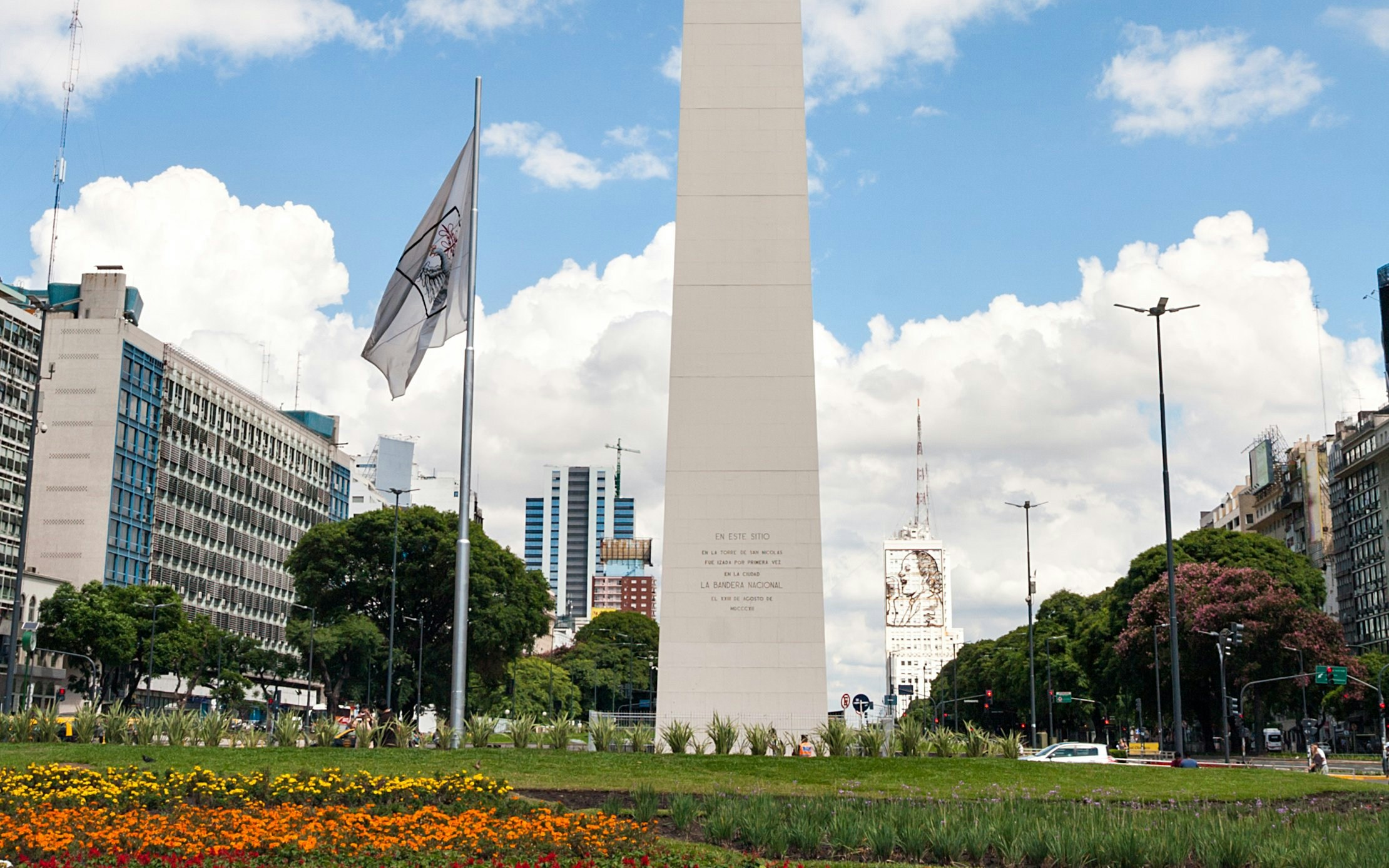
Obelisco in Buenos Aires with surrounding cityscape and colorful flowers in the foreground.
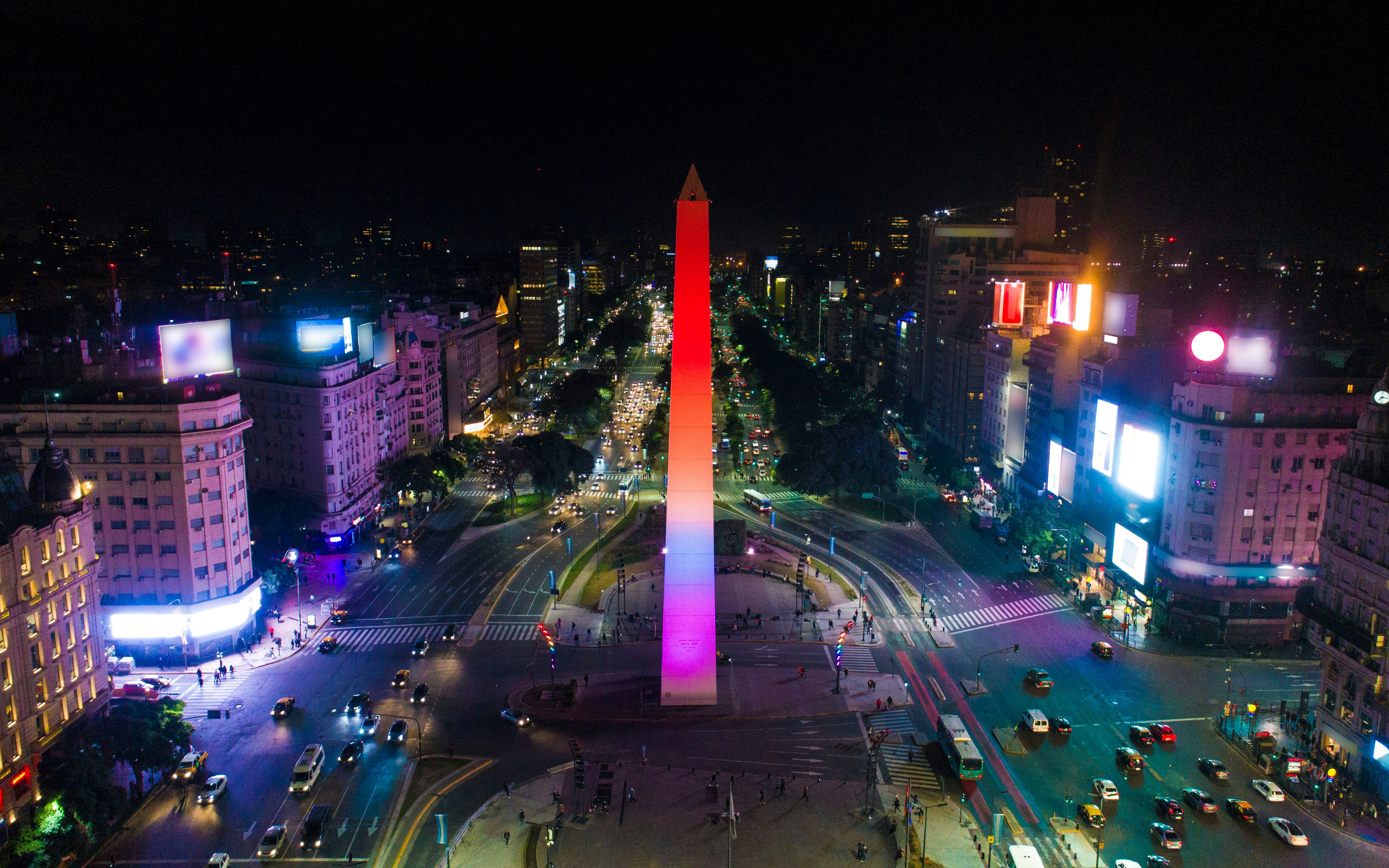
Night aerial view of the Obelisk of Buenos Aires in Plaza de la República, Argentina.
1/5

The Obelisk structure

The towering white stone monument rises over 67.5 meters, creating a striking vertical contrast against the surrounding avenues and historic buildings. It rises dramatically from Avenida 9 de Julio, surrounded by flowing traffic, theaters, offices, and the city’s unmistakable urban energy.

Plaza de la República

The plaza surrounding the Obelisco serves as an open urban space where locals gather, protest, celebrate, and pass through daily life.

Avenida 9 de Julio views

From the base of the Obelisco, visitors enjoy sweeping views of the world’s widest avenue, framed by theaters, offices, and cultural landmarks. You can even spot this from the tower’s summit, running east-west.

Commemorative inscriptions

Inscriptions on the monument mark key moments in Argentine history, including the first raising of the national flag in Buenos Aires in 1812.

The Obelisco's nighttime illumination

At night, the Obelisco glows with dynamic lighting during national celebrations, concerts, and commemorations, creating a striking visual focal point.

Brief history of Obelisco de Buenos Aires

The Obelisco de Buenos Aires was inaugurated on May 23, 1936, as part of the city’s celebrations marking 400 years since its first founding. The site holds historical importance, as it was near this location that Argentina’s national flag, as we know it today, was raised for the first time in 1812.

Initially controversial due to its modern appearance and cost, the monument quickly became a defining feature of the city. Over the decades, it transformed into a powerful symbol of Buenos Aires, witnessing political demonstrations, cultural movements, and historic celebrations.

Today, the Obelisco stands as both a reminder of the city’s past and a constant presence in its contemporary identity. All four facades feature inscriptions that serve as a reminder of key moments in the city’s evolution, both pre- and post-independence.

Who built Obelisco de Buenos Aires?

Argentine architect Alberto Prebisch designed the Obelisco de Buenos Aires. A pioneer of modernism in Argentina, Prebisch aimed for a bold, minimalist structure that reflected progress and urban transformation. In fact, the tower was constructed in a mere 31 days by 157 workers who worked at monumental speeds to accomplish this feat.

Architecture of Obelisco de Buenos Aires

The Obelisco de Buenos Aires reflects early 20th-century modernist architecture, emphasizing simplicity, scale, and symbolism over ornamentation. Constructed using reinforced concrete and clad in white stone, the monument rises approximately 67.5 meters with a narrow pyramidal form.

Its clean lines and lack of decorative detail were deliberate, aligning with modernist ideals of functionality and clarity. A narrow internal staircase leads to the top, though public access remains restricted.

The monument’s verticality contrasts sharply with the horizontal sprawl of Avenida 9 de Julio, reinforcing its role as a visual anchor within the urban landscape.

Frequently asked questions about Obelisco de Buenos Aires

The Obelisco was constructed in 1936 in a mere 31 days, all thanks to the hard work of 157 workers. Its prominent position creates an unmatched visual anchor in the city center.